

If you have ever stood at a convenience store counter in Toronto, Calgary, or Halifax and winced at the price of a pack, you are not alone. The question “how much is 1 pack of cigarettes in Canada” is one of the most searched tobacco-related queries in the country, and the honest answer is: it depends heavily on where you live. Canada has some of the highest cigarette prices in the world, and because each province and territory sets its own tobacco tax on top of federal excise duty, a smoker in Quebec can pay several dollars less per pack than a smoker in Manitoba or Newfoundland.
This guide breaks down average cigarette prices across every Canadian province and territory, explains exactly why the numbers vary so much, and shows Canadian smokers practical ways to spend less without compromising on the brands they actually enjoy.

The Quick Answer: What Canadians Pay for a Pack in 2026
Across Canada, a standard pack of 20 premium-brand cigarettes currently costs somewhere between $14 and $22 CAD, while a king-size pack of 25 typically lands between $17 and $26 CAD. The national average for a 20-pack sits at roughly $17 to $18, which means a pack-a-day smoker is spending well over $6,000 a year at retail.
Those figures apply to mainstream retail channels such as gas stations, convenience stores, and grocery outlets. Discount brands, bulk cartons, and online tobacco retailers can bring the effective per-pack cost down significantly, which we cover later in this article.
Average Cigarette Prices by Province and Territory
The table below shows approximate retail price ranges for a pack of 20 and a pack of 25 cigarettes in each province and territory. Prices are estimates based on typical premium-brand shelf prices and will shift slightly with each provincial budget and federal excise adjustment.
| Province / Territory | Pack of 20 (approx.) | Pack of 25 (approx.) | Price Level |
|---|---|---|---|
| Quebec | $13.50 – $15.50 | $16.50 – $19.00 | Lowest |
| Ontario | $15.50 – $17.50 | $19.00 – $21.50 | Below average |
| British Columbia | $17.00 – $19.00 | $21.00 – $23.50 | Average |
| Alberta | $17.50 – $19.50 | $21.50 – $24.00 | Average |
| New Brunswick | $17.00 – $19.00 | $21.00 – $23.50 | Average |
| Nova Scotia | $17.50 – $19.50 | $21.50 – $24.00 | Average |
| Prince Edward Island | $18.00 – $20.00 | $22.00 – $24.50 | Above average |
| Saskatchewan | $18.50 – $20.50 | $22.50 – $25.00 | Above average |
| Newfoundland & Labrador | $19.00 – $21.50 | $23.00 – $26.00 | High |
| Manitoba | $19.50 – $21.50 | $23.50 – $26.50 | High |
| Yukon | $18.50 – $21.00 | $22.50 – $25.50 | High |
| Northwest Territories | $20.00 – $23.00 | $24.50 – $28.00 | Highest |
| Nunavut | $20.00 – $23.50 | $25.00 – $28.50 | Highest |
Quebec consistently remains the cheapest province to buy cigarettes thanks to a comparatively modest provincial tobacco tax, while the northern territories and Manitoba sit at the top because of high provincial levies combined with remote-location shipping costs.
Why Cigarette Prices Vary So Much Across Canada
A pack of cigarettes in Canada is one of the most heavily taxed consumer products you can buy. In most provinces, taxes make up 65% to 75% of the shelf price. Here is how the layers stack up.
1. Federal Excise Duty
Every cigarette sold legally in Canada carries a federal excise duty collected by the Canada Revenue Agency. This rate is indexed to inflation and adjusted every April, with additional increases announced in federal budgets. You can view the current figures on the official Canadian cigarette excise tax page, and the most recent cigarette tax rates in Canada notice outlines the April 2026 adjustment. Federal duty alone adds roughly $3.50 to $4.00 per pack of 20 and is identical in every province.
2. Provincial Tobacco Tax
This is the single biggest reason prices differ from one province to the next. Each province charges a per-cigarette tobacco tax that ranges from roughly 15 cents per cigarette in Quebec to over 30 cents per cigarette in Manitoba. On a 20-pack, that difference alone can be more than $3.00. Provincial rules and rates are published by each government, for example Ontario tobacco tax legislation, the Quebec tobacco tax framework, and the Alberta tobacco tax program.
3. Sales Tax (GST, HST, or PST)
Sales tax is applied on top of the already-taxed price, which creates a tax-on-tax effect. Provinces with 15% HST (the Atlantic provinces) feel this more than Alberta, which charges only the 5% GST. Quebec applies GST plus QST, but its low tobacco tax still keeps it the cheapest overall.
4. Retail Markup and Location
Convenience stores and gas stations typically add a higher markup than big-box grocery chains. Remote communities in the North face additional freight costs, which is why a pack in Iqaluit or Yellowknife can cost several dollars more than in Edmonton or Winnipeg.

Price Breakdown: What Is Actually Inside an $18 Pack?
To make the numbers concrete, here is an illustrative breakdown of a $18.00 pack of 20 premium cigarettes purchased in a mid-priced province such as British Columbia or Alberta.
| Cost Component | Approximate Amount | Share of Price |
|---|---|---|
| Federal excise duty | $3.75 | 21% |
| Provincial tobacco tax | $6.50 | 36% |
| Sales tax (GST/PST/HST) | $1.25 | 7% |
| Manufacturer price | $4.50 | 25% |
| Wholesale and retail margin | $2.00 | 11% |
| Total shelf price | $18.00 | 100% |
Roughly $11.50 of that $18.00 pack goes directly to government. This is by design: Canada’s tobacco strategy uses price as a primary lever to reduce smoking rates, and every legal pack carries a Canadian tobacco excise stamp proving duty has been paid.
Pack Size Matters: 20 vs. 25 Cigarettes
Unlike the United States, where 20-packs dominate, Canadian smokers have long favoured the king-size 25-pack. Because taxes are charged per cigarette, a 25-pack is not cheaper overall, but it is usually slightly cheaper per cigarette once the fixed retail markup is spread across more sticks. For a daily smoker, the difference adds up over a month.
- Pack of 20: lower upfront cost, easier to budget, common for lighter smokers.
- Pack of 25: marginally better per-cigarette value, the traditional Canadian format.
- Carton (8 × 25 or 10 × 20): best per-pack price at retail, typically saving $5 to $15 versus buying individually.
Premium vs. Value Brands in Canada
Canadian retail shelves are divided into premium brands (du Maurier, Player’s, Export A, Belmont), mid-tier brands (Canadian Classics, Next, Pall Mall), and value or discount brands. In most provinces the gap between the most expensive premium pack and the cheapest value pack is only $3 to $5, because taxes dominate the price. However, that gap grows considerably when you move outside traditional convenience-store channels and buy cartons or shop with an online retailer.
Typical Retail Price Tiers (Pack of 20)
- Premium: $18.00 – $22.00
- Mid-tier: $16.00 – $19.00
- Value / discount: $14.00 – $17.00
How Canadian Smokers Are Spending Less Per Pack
With prices climbing every year, many Canadians have changed how and where they buy. Here are the most common strategies.
- Buy cartons instead of single packs. The per-pack saving is consistent across every province.
- Switch to value brands. Many smokers find discount cigarettes deliver a comparable experience at a noticeably lower price.
- Shop online. Online tobacco retailers often list packs at a fraction of convenience-store prices, especially on multi-carton orders.
- Compare flavour tiers. Light and ultra light options are generally priced the same as full flavour, so choose based on taste rather than cost.
- Mix and match in bulk. Bulk bundles let you spread the saving across several brands at once.
SmokeKing is one example of a Canada-wide online smoke shop that lists popular brands such as Canadian Classics, PlayFare’s, Dakota, and BB at prices that sit well below typical provincial retail averages, with secure ordering and delivery across the country. A few examples from the current catalogue illustrate how much the online channel can change the per-pack math:
| Product | Image | Pack Size | Online Price |
|---|---|---|---|
| Canadian Classics Original | 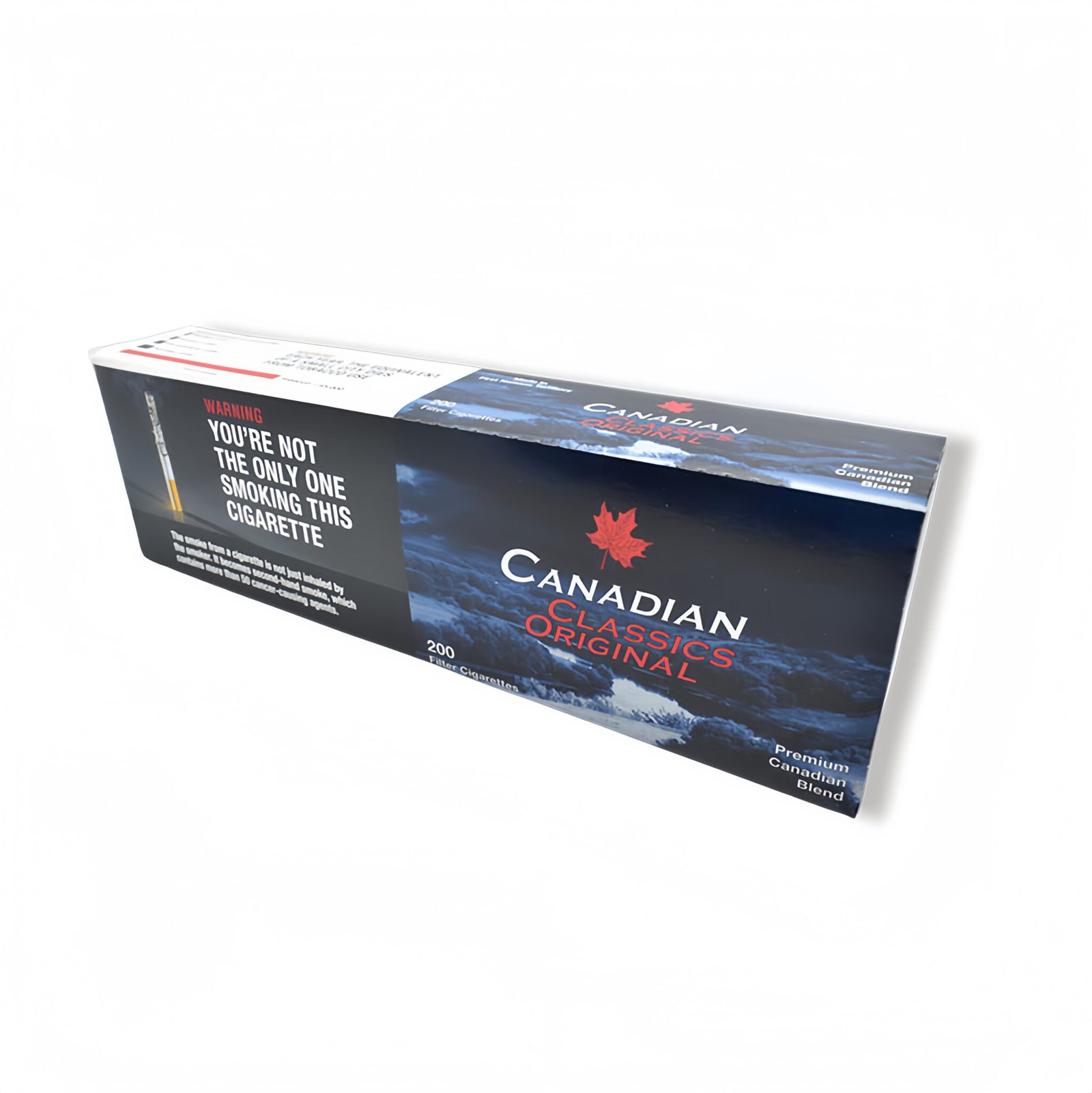 |
20 / pack | $24.99 (reg. $55) |
| Canadian Menthol King Size |  |
25 / pack | $28.99 |
| PlayFare Full |  |
20 / pack | $24.99 (reg. $55) |
| Canadian Goose Full King Size | 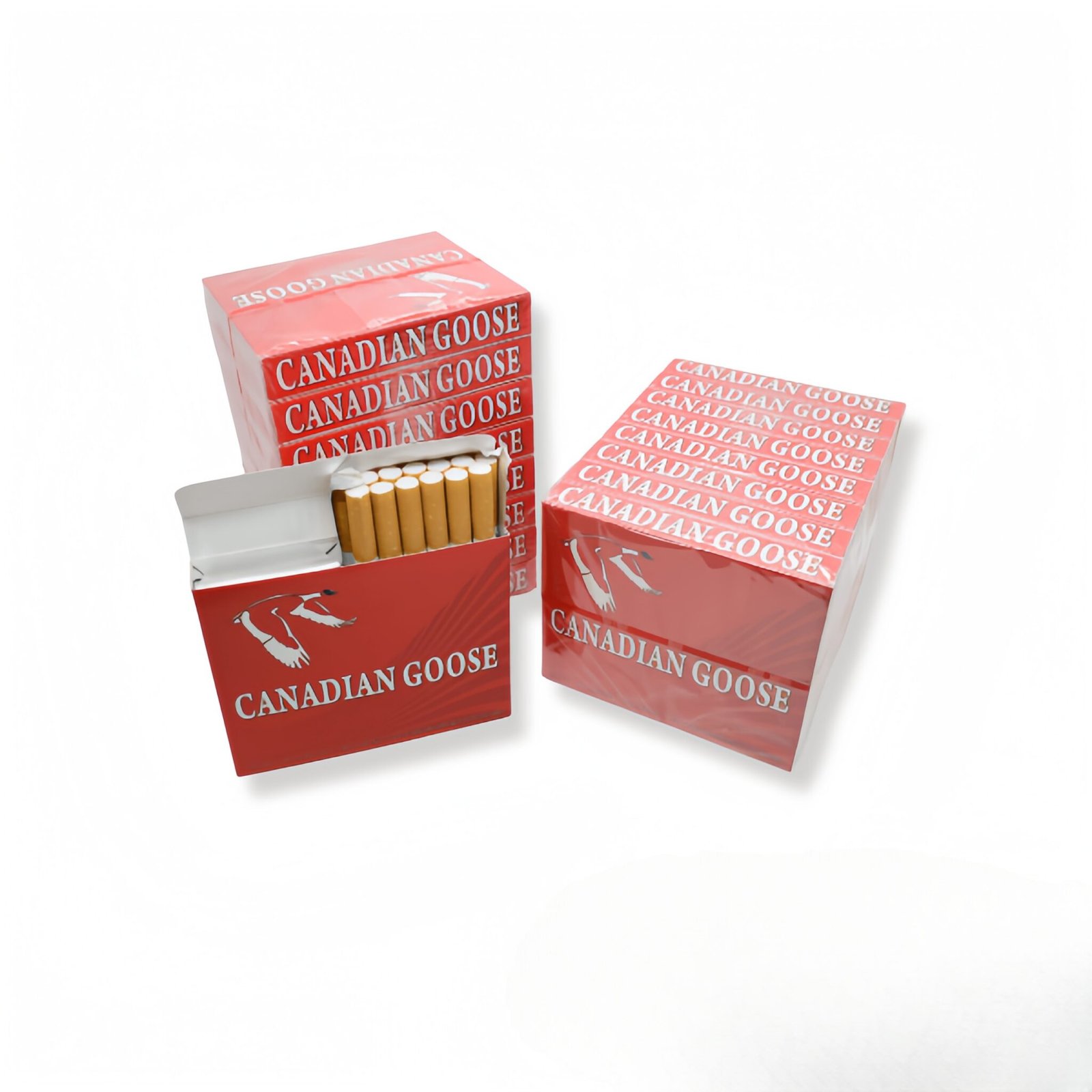 |
25 / pack | $29.99 (reg. $60) |
| Mix & Match – Pick Any 50 Cartons |  |
50 cartons | $990.00 |
Note that listed online prices shown on product pages reflect carton or multi-pack pricing structures, so always check the product description for the exact quantity before comparing with a single retail pack. You can browse the complete range of Canadian cigarettes, explore menthol cigarettes, or view all products to compare what you currently pay against online pricing.

Cigarette Prices in Canada’s Major Cities
Because provincial tax is the main driver, cities within the same province show similar pricing, but urban convenience stores and airports tend to sit at the upper end of the range.
| City | Province | Typical 20-Pack Price |
|---|---|---|
| Montreal | Quebec | $14.00 – $15.50 |
| Toronto | Ontario | $16.00 – $17.50 |
| Ottawa | Ontario | $15.75 – $17.25 |
| Vancouver | British Columbia | $17.50 – $19.00 |
| Calgary / Edmonton | Alberta | $17.75 – $19.50 |
| Halifax | Nova Scotia | $18.00 – $19.50 |
| Regina / Saskatoon | Saskatchewan | $18.75 – $20.50 |
| Winnipeg | Manitoba | $19.75 – $21.50 |
| St. John’s | Newfoundland & Labrador | $19.50 – $21.50 |
How Canadian Prices Compare Internationally
Canada sits firmly among the most expensive countries in the world for cigarettes. A 20-pack averaging $17 to $18 CAD is roughly double the US national average, slightly below Australia and New Zealand, and comparable to the United Kingdom, Ireland, and Norway. The high price is a direct result of deliberate federal and provincial tax policy, and according to published smoking statistics Canada, national smoking prevalence has fallen to around 10% to 12% of adults as prices have climbed.
Frequently Asked Questions
How much is 1 pack of cigarettes in Canada on average?
The national average for a pack of 20 premium cigarettes is approximately $17 to $18 CAD. A king-size pack of 25 averages roughly $21 to $23. Quebec is cheapest, and the northern territories are most expensive.
Which province has the cheapest cigarettes in Canada?
Quebec has the lowest cigarette prices in Canada, with 20-packs commonly selling for $13.50 to $15.50 due to its lower provincial tobacco tax rate.
Why are cigarettes so expensive in Canada?
Roughly two-thirds of the shelf price is tax: federal excise duty, provincial tobacco tax, and sales tax. Canada uses high tobacco taxation intentionally as a public health measure to discourage smoking.
Do cigarette prices in Canada go up every year?
Yes. Federal excise duty is indexed to inflation and adjusted each April, and most provinces raise tobacco tax periodically in their budgets. Expect prices to increase by roughly 50 cents to $1.00 per pack annually.
Is it cheaper to buy cigarettes online in Canada?
Buying cartons online is generally the most cost-effective legal option for regular smokers, as online retailers carry lower overhead than convenience stores and offer multi-carton bundle pricing.
How much does a carton of cigarettes cost in Canada?
At retail, a carton of 200 cigarettes (8 × 25 or 10 × 20) typically costs between $130 and $200 depending on the province and brand. Online carton pricing can be substantially lower.
Final Thoughts
So, how much is 1 pack of cigarettes in Canada? For most Canadians in 2026, the realistic answer is $14 to $22 for a pack of 20, with your province determining where you fall in that range. Taxes drive the price far more than the brand you choose, which is why smokers who want to reduce their spending get the biggest results by changing pack size, switching to value brands, and shopping online rather than hunting for a slightly cheaper premium brand at the corner store. Prices will keep rising with each federal and provincial adjustment, so understanding exactly what you are paying for is the first step toward spending less.