
If you have walked into a convenience store in Toronto, Montreal, Vancouver or Halifax lately, you already know the answer is “a lot more than it used to be.” Depending on the province, a standard pack of 20 cigarettes in Canada now costs roughly $13 to $22 CAD, and a king-size pack of 25 can push past $25 in the most expensive regions. This guide breaks down what Canadians are actually paying, why the price varies so much between provinces, how federal and provincial taxes are built into every pack, and where smokers across the country are finding better value.

Quick Answer: Average Cigarette Prices in Canada
There is no single national price for cigarettes in Canada, because each province and territory sets its own tobacco tax on top of federal excise duty and sales taxes. That said, here is a realistic snapshot of what most Canadians pay at a corner store or gas station:
| Format | Typical Retail Price (CAD) | Notes |
|---|---|---|
| Pack of 20 (regular size) | $13 – $20 | Lowest in Quebec, highest in Western and Atlantic Canada |
| Pack of 25 (king size) | $17 – $26 | Popular format in Canada; slightly better per-cigarette value |
| Carton of 200 (8 or 10 packs) | $130 – $210 | Premium brands at major retailers sit at the top of this range |
| Budget / value brands | $11 – $16 per pack | Lower manufacturer pricing, same taxes applied |
Prices are approximate, change frequently with tax adjustments, and vary by brand and retailer. The one constant is the direction: cigarette prices in Canada have climbed steadily for over a decade, with taxes accounting for the largest share of what you pay at the counter.
Why Cigarettes Cost So Much in Canada
Canada has some of the highest cigarette prices in the world, and that is by design. Federal and provincial governments use tobacco taxation as a public health tool under Canada’s tobacco strategy, which aims to reduce smoking rates to under 5% by 2035. The result is that in most provinces, taxes make up roughly 65% to 75% of the retail price of a pack.
The Four Layers of Cigarette Pricing
- Manufacturer and retailer price – the base cost of the product, including production, distribution and store margin. This is the only portion that varies meaningfully between premium and budget brands.
- Federal excise duty – a fixed amount per cigarette charged by the Canada Revenue Agency, currently working out to roughly $3.60 to $3.90 per pack of 20. Rates are indexed to inflation every April 1 and have also been increased in several recent federal budgets.
- Provincial or territorial tobacco tax – another per-cigarette charge that differs widely across the country, from under $4 per pack in Quebec and Ontario to over $6 per pack in British Columbia, Manitoba and Newfoundland and Labrador.
- Sales tax – GST, HST or GST plus PST, applied to the entire price including the excise duty and tobacco tax. Yes, Canadians pay tax on tax.
You can check the current federal rates on the CRA’s page for Canadian cigarette excise tax, and the official notice covering cigarette tax rates in Canada effective April 1, 2026.

Cigarette Prices by Province and Territory
Where you live is the single biggest factor in how much a pack costs. The table below shows the approximate provincial tobacco tax per pack of 20 and the typical retail price range Canadians see for a mainstream brand. Sales tax is included in the retail estimate.
| Province / Territory | Approx. Provincial Tax (per 20) | Typical Pack Price (20s) | Sales Tax |
|---|---|---|---|
| Quebec | ~$3.80 | $13 – $16 | GST + QST (14.975%) |
| Ontario | ~$3.70 | $14 – $18 | HST 13% |
| Alberta | ~$5.50 | $16 – $20 | GST 5% only |
| British Columbia | ~$6.50 | $17 – $21 | GST 5% (tobacco PST-exempt) |
| Saskatchewan | ~$5.80 | $17 – $21 | GST + PST (11%) |
| Manitoba | ~$6.00 | $18 – $22 | GST + RST (12%) |
| New Brunswick | ~$5.10 | $16 – $20 | HST 15% |
| Nova Scotia | ~$5.90 | $17 – $21 | HST 15% |
| Prince Edward Island | ~$5.90 | $17 – $21 | HST 15% |
| Newfoundland and Labrador | ~$6.50 | $18 – $22 | HST 15% |
| Yukon, NWT, Nunavut | ~$6.00 – $7.00 | $19 – $25 | GST 5% + high shipping costs |
Figures are rounded estimates for comparison purposes. Official provincial rates are published by each government; for example, see Quebec tobacco tax, Ontario tobacco tax and Alberta tobacco tax pages.
Cheapest Provinces for Cigarettes
Quebec consistently has the lowest cigarette prices in the country, followed closely by Ontario. Both provinces have kept their tobacco tax rates well below the national average, which is why smokers in Ottawa and Gatineau notice a real difference crossing the river, and why border communities see steady cross-provincial traffic.
Most Expensive Provinces for Cigarettes
Smokers in Manitoba, British Columbia, Newfoundland and Labrador and the northern territories pay the most. Manitoba and BC have aggressively raised provincial tobacco tax, while in the territories remote logistics add a premium on top of already high taxes. A pack of 25 in Winnipeg, Vancouver or Iqaluit can easily exceed $24.

What a Pack Really Costs: Price Breakdown Example
To see how the layers add up, consider a mainstream king-size pack of 25 sold in Ontario for about $20. The approximate split looks like this:
| Component | Approx. Amount | Share of Price |
|---|---|---|
| Federal excise duty (25 cigarettes) | $4.60 | 23% |
| Ontario tobacco tax (25 cigarettes) | $4.62 | 23% |
| HST (13%) | $2.30 | 12% |
| Manufacturer, wholesale and retail margin | $8.48 | 42% |
| Total at the counter | $20.00 | 100% |
In high-tax provinces such as BC or Manitoba, the government share climbs closer to 70%, and the product itself becomes a minority of what you pay. This is also why switching from a premium brand to a value brand saves less than many smokers expect — the tax portion is identical regardless of brand.
How Canadian Prices Have Changed Over Time
Canadians who remember paying $8 or $9 for a pack in the mid-2000s are not imagining things. A few key milestones explain the climb:
- 2014: The federal government raised excise duty by about $4 per carton and introduced automatic inflation indexing.
- 2017–2019: Federal rates were raised again and indexing moved to annual adjustments every April 1.
- 2020–2021: Plain packaging rules under the Canadian cigarette packaging regulations took full effect, removing brand colours and logos from every pack sold in Canada.
- 2023–2024: Several provinces, including Quebec and Manitoba, raised tobacco taxes, and the federal budget added another $4 per carton.
- 2025–2026: Continued inflation indexing pushes federal duty higher each spring, with provincial increases layered on top in several regions.
The cumulative effect is that the average Canadian pack has roughly doubled in price over fifteen years, while smoking rates have fallen to around 10–12% of adults according to smoking statistics Canada publishes through Health Canada.
Pack Sizes and Formats Canadians Buy
Unlike the United States, where the 20-pack dominates, Canada has a strong market for larger formats. Understanding the options helps you compare value accurately:
- Regular 20-pack – the standard format, widely available in every province.
- King size 25-pack – extremely popular in Ontario and Western Canada; usually offers a slightly lower cost per cigarette.
- Cartons of 200 – eight 25-packs or ten 20-packs; the most economical way to buy for regular smokers.
- Smaller packs – some flavoured and menthol-style products come in packs of 10, popular with occasional smokers.
- Bags of 200 – loose-packed cigarettes sold in bags, a lower-cost format that has grown in popularity with budget-conscious smokers.
Whatever the format, every legal pack sold in Canada must carry a federal excise stamp and provincial tear tape. You can read more about identifying them on the CRA’s guide to Canadian tobacco excise stamps.

How Canadian Smokers Are Saving Money
With prices this high, it is no surprise that many Canadians have changed how and where they buy. The most common strategies include:
1. Buying Cartons Instead of Single Packs
Convenience stores earn their margin on single packs. Buying by the carton can trim a dollar or two per pack, which adds up to hundreds of dollars a year for a pack-a-day smoker.
2. Switching to Value Brands
Budget-friendly options such as discount cigarettes deliver the same formats and strengths as premium labels at a lower base price. For many smokers in Ontario and Quebec, the switch is the simplest way to cut monthly spending.
3. Choosing Formats That Fit Their Habit
Light smokers often do better with 10-packs or 20-packs, while daily smokers benefit from 25-packs and cartons. Smokers who prefer a smoother draw frequently compare light cigarettes against full-flavour options, since pricing is usually the same across strengths within a brand.
4. Shopping Online
Ordering online lets Canadians compare dozens of brands side by side without driving between stores, and delivery to the door is especially valuable for people in rural areas, the Prairies and Atlantic Canada where local selection is limited and prices are highest.
Popular Canadian Cigarette Brands and Online Pricing
Below is a selection of popular Canadian-market cigarettes and the current online pricing available for each. Pricing is listed as shown at time of writing and may change.
| Product | Format | Regular Price | Current Price |
|---|---|---|---|
| Canadian Classics Original | 20/Pack | $55.00 | $24.99 |
| Canadian Menthol | 20/Pack | $55.00 | $24.99 |
| Canadian Original King Size | 25/Pack | – | $28.99 |
| PlayFare Full | 20/Pack | $55.00 | $24.99 |
| Discount Full | 20/Pack | $55.00 | $24.99 |
| Canadian Goose Full King Size | 25/Pack | $60.00 | $29.99 |
| Dakota Light | 20/Pack | $55.00 | $25.99 |
| Pop N’ Smoke Menthol | 10/Pack | $55.00 | $24.99 |
| Mix & Match – Pick Any 50 Cartons | Bulk | – | $990.00 |
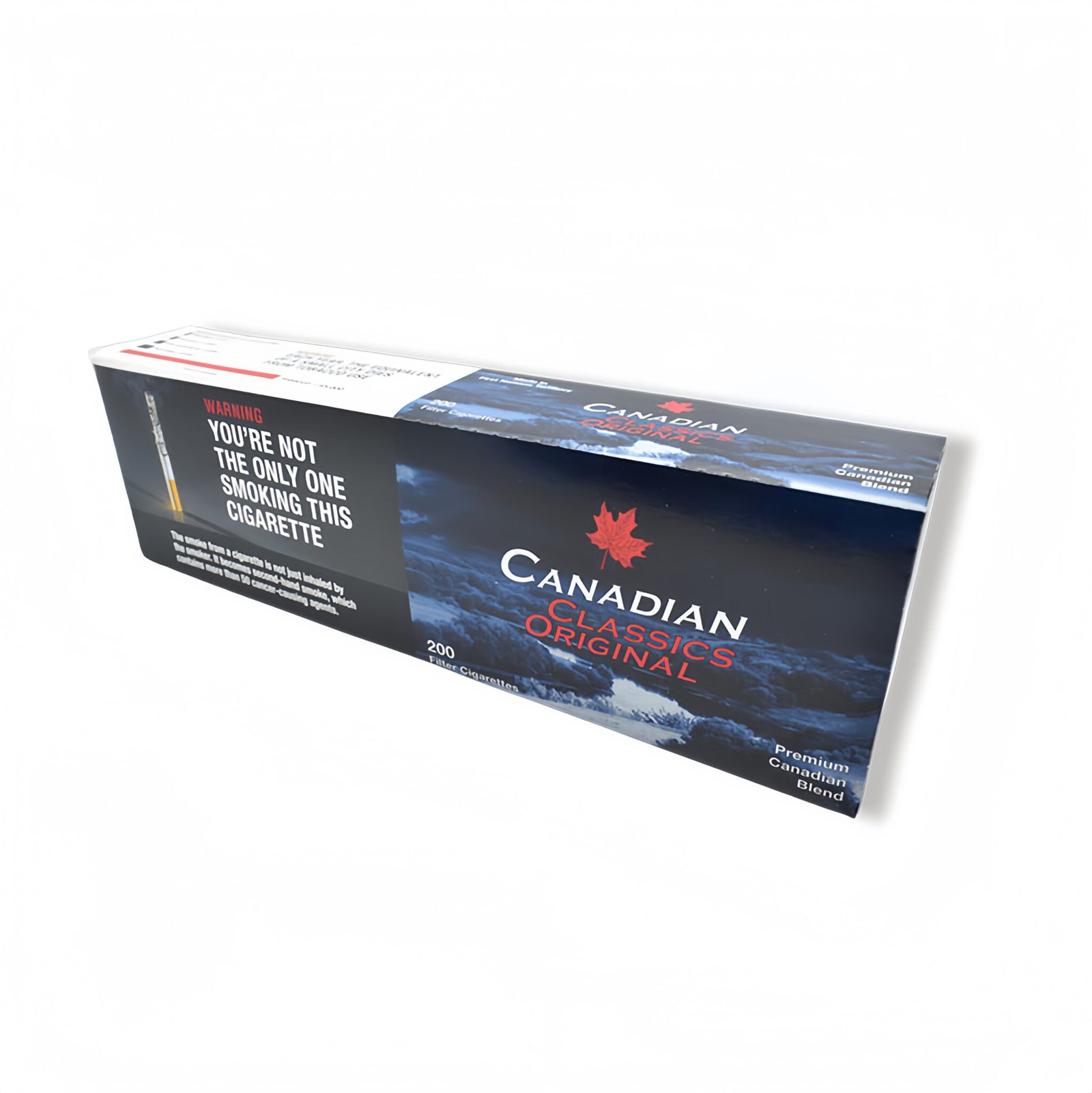
Menthol remains one of the most requested styles among Canadian smokers even after flavour restrictions tightened in most provinces, and shoppers can still browse a full range of menthol cigarettes in both 10-pack and 20-pack formats. For a complete overview of every brand and strength available, the all products catalogue is the easiest place to compare pricing in one view.
About SmokeKing: SmokeKing is a trusted online smoke shop serving customers across Canada with a wide selection of quality cigarette and tobacco products. The store provides a convenient online shopping experience, letting Canadians explore different brands, place orders securely and receive products through reliable delivery services — with a focus on competitive pricing, customer satisfaction and dependable service from coast to coast.
Legal Requirements Every Canadian Buyer Should Know
Price is only part of the picture. Canadian smokers should also be aware of the rules that shape how cigarettes are sold:
- Minimum age: 18 in Alberta, Saskatchewan, Manitoba and Quebec; 19 in Ontario, British Columbia, the Atlantic provinces and the territories (PEI is 21). Retailers must verify age under tobacco product regulations.
- Plain packaging: All packs sold in Canada are a standardized drab brown with uniform fonts, and must display rotating tobacco packaging warnings, including on-cigarette warnings introduced in 2023.
- Display bans: Cigarettes cannot be visibly displayed in retail stores anywhere in Canada, which is one reason comparing prices in person is difficult.
- Flavour restrictions: Most flavoured cigarettes are banned federally, with menthol prohibited in most provinces, though some menthol-style and tipped products remain available.
- Excise stamps: Legal product carries a federal stamp and provincial marking; the absence of a stamp means tax has not been paid.
Frequently Asked Questions
How much is a pack of cigarettes in Ontario?
A standard pack of 20 typically costs between $14 and $18 in Ontario, while a king-size 25-pack ranges from $17 to $22 depending on the brand and retailer. Ontario sits in the lower-middle of the national range thanks to a comparatively modest provincial tobacco tax.
Which province has the cheapest cigarettes in Canada?
Quebec has the cheapest cigarettes in Canada, with many packs of 20 selling for $13 to $16. Ontario is a close second. Both provinces apply tobacco tax of under $4 per pack of 20, compared with $6 or more in BC, Manitoba and Newfoundland and Labrador.
How much is a carton of cigarettes in Canada?
A carton of 200 cigarettes generally costs between $130 and $210 at Canadian retailers. Premium brands in high-tax provinces sit at the top of that range, while value brands in Quebec and Ontario are at the bottom.
Why are cigarettes more expensive in Canada than in the United States?
Canadian federal and provincial tobacco taxes are substantially higher than most US state and federal rates. A pack that costs $8 USD in a low-tax US state can cost $18 to $22 CAD just across the border because taxes alone account for roughly two-thirds of the Canadian retail price.
Do cigarette prices go up every year in Canada?
Yes. Federal excise duty is automatically indexed to inflation every April 1, and provinces frequently adjust their own rates in annual budgets. Smokers should expect a modest price increase each spring, with larger jumps whenever a government introduces a dedicated tobacco tax hike.
Is it cheaper to buy cigarettes online in Canada?
Buying online can offer meaningful savings, particularly when purchasing cartons or taking advantage of multi-carton bundles. It also gives Canadians in remote or high-cost regions access to the same selection and pricing as those in major cities, delivered directly to their door.
Final Thoughts
So, how much is a pack of cigarettes in Canada? For most Canadians the honest answer is $13 to $22 for a pack of 20, with Quebec and Ontario at the affordable end and Manitoba, BC, Newfoundland and the territories at the expensive end. Taxes drive the majority of that cost and rise every year, which is why more smokers are turning to cartons, value brands and online shopping to keep their spending under control. Whatever your choice, always confirm the product carries proper Canadian excise markings, stay informed about your province’s rules, and compare prices before you buy — the differences across the country are larger than most people realize.