
If you have walked into a convenience store anywhere from Halifax to Vancouver and asked for a pack of menthols, you already know the answer is not a simple yes or no. Menthol cigarettes were once one of the most popular flavour categories in the country, but a wave of provincial bans followed by a federal prohibition changed the landscape completely. This guide explains what happened, what the rules look like today, and what Canadian smokers who still prefer a cool, mint-style smoke are actually choosing in 2026.

The Short Answer for Canadian Smokers
Menthol cigarettes have been prohibited across Canada since October 1, 2017. That date marked the moment Health Canada added menthol to the list of banned additives under the federal Tobacco Act (now the Tobacco and Vaping Products Act). Before that, individual provinces had already pulled menthols off store shelves one by one, starting with Nova Scotia in 2015.
In practical terms, this means mainstream manufacturers such as Imperial Tobacco Canada, Rothmans Benson & Hedges, and JTI-Macdonald stopped producing and distributing menthol-flavoured cigarettes for the Canadian market. The familiar green packs that used to sit beside the regular brands at gas stations and corner stores are gone from licensed retail.
So why do Canadians still search for menthols every day? Because the demand did not disappear with the regulation. Many smokers switched to smoother regular blends, some moved to mint-flavoured alternatives, and others looked to online smoke shops that list menthol-style products in their catalogues. Understanding the difference between these options is the key to making an informed decision.
How Canada Phased Out Menthol: A Province-by-Province Timeline
Canada did not ban menthol overnight. The prohibition rolled out province by province before Ottawa made it national. Nova Scotia earned international attention as the first jurisdiction in the world to ban menthol cigarettes outright, and other provinces quickly followed its lead.
| Jurisdiction | Menthol Ban Effective Date | Notes |
|---|---|---|
| Nova Scotia | May 31, 2015 | First jurisdiction in the world to ban menthol cigarettes |
| Alberta | September 30, 2015 | Part of a broader flavoured tobacco ban |
| New Brunswick | January 1, 2016 | Included menthol in its flavour restrictions |
| Quebec | August 26, 2016 | Covered cigarettes and other flavoured tobacco |
| Ontario | January 1, 2017 | Canada’s largest cigarette market joined the ban |
| Federal (All of Canada) | October 1, 2017 | Menthol added to prohibited additives nationwide |
You can review the full framework of Canadian tobacco regulations on the Health Canada website, including the additive schedule that formally lists menthol as prohibited in cigarettes, blunt wraps, and most cigars.
What Exactly Does the Federal Menthol Ban Cover?
The federal prohibition is broader than many smokers realize. It is not just about the word “menthol” printed on a pack. Health Canada’s tobacco product regulations prohibit menthol as an additive in several product categories, and the restriction applies to the ingredient itself, regardless of marketing.
Products Affected by the Menthol Prohibition
- Cigarettes – all menthol-flavoured cigarettes, including “crush ball” or capsule filters that release menthol when squeezed
- Blunt wraps – menthol and other characterizing flavours
- Most cigars – including little cigars and cigarillos, with limited exceptions for certain traditional flavours in larger cigars
- Filters, papers, and tubes – menthol cannot be added to the components of a cigarette either
Why Canada Took This Step
Health Canada’s position was that menthol masks the harshness of tobacco smoke, making it easier for new and younger smokers to start. Survey data at the time suggested that menthol use was disproportionately high among Canadian youth compared to adults. The ban was positioned as a central part of Canada’s tobacco strategy, which set a goal of reducing tobacco use to less than 5% of the population by 2035.

What Canadian Smokers Switched To After the Ban
When menthols left the shelves, roughly a quarter of a million Canadian menthol smokers had to make a choice. Research conducted in Ontario after the provincial ban found that a meaningful share of menthol smokers quit altogether, while the majority transitioned to other products. Here is how the market reshaped itself.
1. Smoother Regular and Light Blends
Many former menthol smokers reported that what they actually valued was a milder, less harsh draw rather than the mint taste itself. This pushed a significant number toward light cigarettes and ultra light blends, which deliver a gentler experience without added flavouring. Brands such as Canadian Classics Silver and PlayFare’s Light became common replacements across Ontario and Quebec.
2. Mint-Flavoured Alternatives and Pouches
Some smokers moved to menthol-flavoured nicotine pouches or vaping products. Note that flavour rules for vaping differ from cigarette rules, and provinces like Quebec and Nova Scotia have since restricted vape flavours as well. Always check your provincial regulations before assuming a flavoured product is available where you live.
3. Online Smoke Shop Catalogues
A third group turned to online retailers. Online smoke shops that ship across Canada often list a dedicated menthol cigarettes category alongside full flavour, light, and ultra light options. These catalogues are built around convenience and price, and they tend to feature value brands rather than the premium names you remember from pre-2017 shelves.
Menthol-Style Products Currently Listed Online in Canada
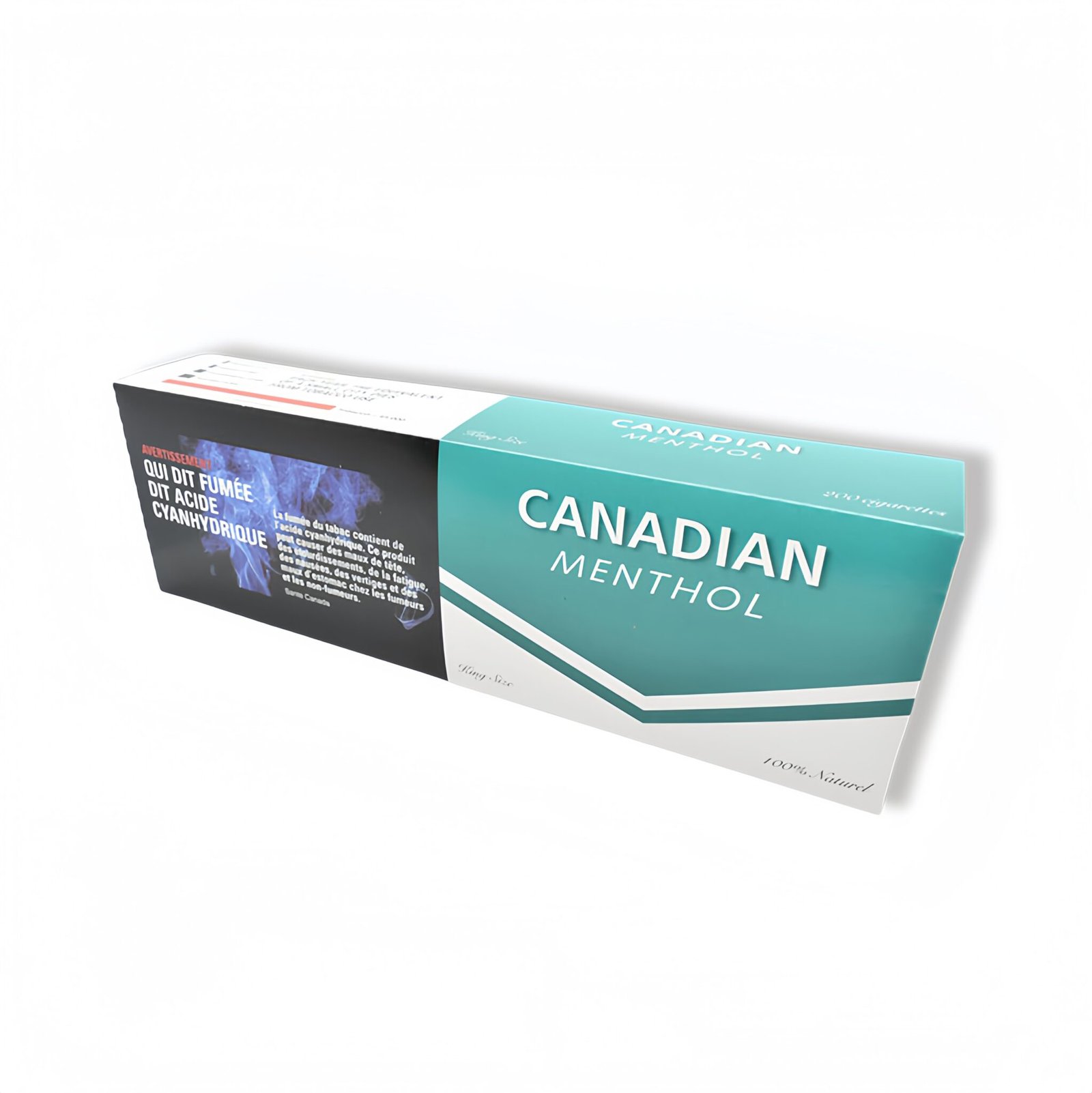
SmokeKing is an online smoke shop serving customers across Canada with a wide selection of cigarette and tobacco products, and its catalogue includes several menthol-labelled options from value brands. The table below shows what is currently listed, so you can compare pack sizes and pricing at a glance. Availability and legal status of tobacco products can vary by province, so Canadian buyers should stay informed about the rules that apply where they live.
| Product | Pack Size | Regular Price | Current Price (CAD) |
|---|---|---|---|
| Canadian Menthol | 20/Pack | $55 | $24.99 |
| Canadian Menthol King Size | 25/Pack | – | $28.99 |
| PlayFare’s Menthol | 20/Pack | $55 | $24.99 |
| Discount Menthol | 20/Pack | $55 | $25.99 |
| Putter’s Menthol | 20/Pack | $55 | $25.99 |
| BB Menthol | 20/Pack | $58 | $28.00 |
| Pop N’ Smoke Menthol | 10/Pack | $55 | $24.99 |
If you are not set on menthol specifically, the broader flavour categories let you compare full flavour, light, and ultra light blends side by side, which is often the fastest way to find a replacement that matches the smoothness you were used to.
Buying Cigarettes in Canada: Rules Every Smoker Should Know
Whether you are shopping at a corner store in Winnipeg or ordering online from Calgary, the same core rules apply across the country. Knowing them protects you from counterfeit products and unexpected problems.
Age Requirements by Province
- 18 years old: Alberta, Saskatchewan, Manitoba, Quebec, Northwest Territories, Nunavut, Yukon
- 19 years old: British Columbia, Ontario, New Brunswick, Nova Scotia, Newfoundland and Labrador
- 21 years old: Prince Edward Island (the highest minimum age in Canada)
Packaging and Excise Stamps
Since 2019, all legal cigarettes sold in Canada must use plain, standardized packaging in a drab brown colour with graphic health warnings. Every pack must also carry a federal and provincial excise stamp. Health Canada’s guide to Canadian cigarette packaging explains what compliant products look like, and the Canada Revenue Agency publishes details on Canadian tobacco excise stamps so consumers can recognize them.
Why Prices Vary So Much Across Canada
A pack of 20 cigarettes can cost anywhere from roughly $14 in Quebec to over $20 in Newfoundland and Labrador, and most of that gap is tax. Federal excise duty increases automatically every April, while each province adds its own tobacco tax on top. This is a major reason Canadian smokers compare prices online and look at carton deals rather than buying pack by pack.

Menthol vs. Light vs. Full Flavour: Which Replacement Fits You?
Former menthol smokers often struggle to describe what they miss. Use this comparison to narrow down your options.
| What You Miss About Menthol | Closest Alternative | Example Brands |
|---|---|---|
| The cooling, minty taste | Menthol-style or mint-flavoured products | Canadian Menthol, Pop N’ Smoke Menthol, Applemint |
| A smooth, less harsh draw | Light or Ultra Light cigarettes | Canadian Lights, Nexx Ultra Light, PlayFare’s Light |
| A fuller body with a mild finish | Medium or Smooth blends | Putter Medium, duMont Smooth |
| Strong, classic tobacco taste | Full Flavour cigarettes | Canadian Full, BB Full Flavor, Rolled Gold Full |
Tips for Canadians Shopping for Cigarettes Online
- Verify the retailer ships to your province. Delivery conditions and provincial rules differ between Ontario, Quebec, BC, and the Atlantic provinces.
- Compare price per cigarette, not per pack. King size 25-packs and carton bundles often work out cheaper than standard 20-packs.
- Look for secure checkout and clear contact information. A legitimate shop will have a visible way to reach customer service before and after your order.
- Read product descriptions carefully. Terms like “menthol,” “smooth,” and “light” mean different things across brands.
- Keep your age verification documents ready. Reputable Canadian retailers will confirm you meet the minimum age in your province.
Browsing the complete range of cigarette products available online is a practical way to compare dozens of brands and pack sizes in one place rather than visiting multiple stores.
Thinking About Quitting Instead?
Studies following Canada’s menthol bans found that a notable percentage of menthol smokers used the change as a reason to quit. If you are in that position, every province offers free support. Health Canada maintains a directory of quit smoking services Canada-wide, including phone lines, text programs, and in-person counselling, and most provincial health plans cover nicotine replacement therapy or prescription medications.

Frequently Asked Questions
When did Canada ban menthol cigarettes?
The federal ban took effect on October 1, 2017. Nova Scotia was the first province to ban them on May 31, 2015, followed by Alberta, New Brunswick, Quebec, Ontario, and others before the national rule.
Are menthol cigarettes sold in regular Canadian stores?
No. Licensed convenience stores, gas stations, and grocery retailers in Canada no longer carry menthol cigarettes from major manufacturers because menthol is a prohibited additive under federal law.
Can I bring menthol cigarettes into Canada from the United States?
Travellers returning to Canada may bring a limited personal allowance of tobacco (typically 200 cigarettes) duty-free after 48 hours abroad. However, the federal menthol prohibition applies to manufacture and sale within Canada, and border rules can change, so check the Canada Border Services Agency before you travel.
What is the closest thing to a menthol cigarette available in Canada?
Most former menthol smokers find that light or ultra light blends provide the smoothness they were used to, while menthol-style listings at online smoke shops and mint-flavoured nicotine products address the cooling taste. The best choice depends on whether you miss the flavour or the mildness.
Did the menthol ban actually reduce smoking in Canada?
Research from Ontario and national data cited in Health Canada’s Tobacco and Vaping Products Act review indicated that menthol smokers quit at higher rates than non-menthol smokers after the ban, which is one reason the policy has been held up internationally as a model.
Final Thoughts
The era of picking up a green pack of menthols at any Canadian corner store ended in 2017, and the federal rules have not loosened since. What remains is a market of smoother regular blends, mint-flavoured alternatives, and menthol-style listings at online smoke shops serving customers across the country. Whichever direction you choose, understanding the regulations, checking excise stamps, comparing prices across pack sizes, and knowing your province’s age requirements will help you shop with confidence. If you have questions about availability or delivery in your area, you can always reach out to customer service before placing an order.