

Whether you are a Canadian driving home from a weekend in Buffalo, flying back to Toronto Pearson after a vacation in Cancún, or a visitor landing in Vancouver for the first time, the same question comes up at the border: how many cigarettes can you take into Canada without paying extra? The short answer is 200 cigarettes, but the full picture depends on how long you were away, your age, and whether the packs carry a Canadian excise stamp. This guide breaks down the Canada Border Services Agency (CBSA) rules in plain English so you know exactly what to declare and what to expect.

The Quick Answer: Your Duty-Free Cigarette Limit for Canada
If you have been outside Canada for 48 hours or more and you meet the minimum age of the province or territory where you re-enter, you may bring in one carton of 200 cigarettes free of duty and taxes as part of your personal exemption. You can combine this with cigars, loose tobacco, and tobacco sticks, since each category has its own separate allowance. Anything beyond these quantities is still allowed, but you will pay duty, GST/HST, and provincial tobacco tax on the excess at the border.
How Long You Were Away Changes Everything
Canada’s personal exemption system is built around the length of your absence. Many travellers are surprised to learn that a short day trip across the border gives you no tobacco allowance at all. Here is how the tiers work:
| Time Outside Canada | Goods Exemption (CAD) | Cigarettes Included? |
|---|---|---|
| Less than 24 hours | No personal exemption | No – full duty and taxes apply |
| 24 hours or more | $200 | No – tobacco and alcohol excluded |
| 48 hours or more | $800 | Yes – up to 200 cigarettes |
| 7 days or more | $800 | Yes – up to 200 cigarettes |
Note that the 48-hour exemption applies per person and cannot be pooled with family members. Each adult traveller claims their own 200 cigarettes; you cannot bring 400 for yourself because your spouse does not smoke.
Full Tobacco Allowance Breakdown
Cigarettes are only one part of the tobacco exemption. Travellers returning to Canada after 48 hours or more may bring all of the following quantities at the same time:
| Tobacco Product | Duty-Free Quantity | Typical Equivalent |
|---|---|---|
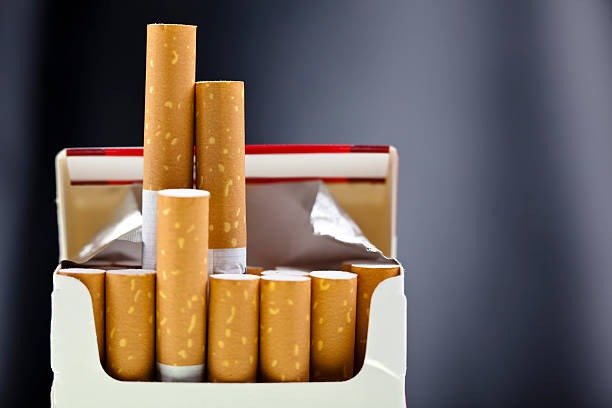
| Cigarettes | 200 | 1 carton (10 packs of 20 or 8 packs of 25) |
| Cigars | 50 | Two standard boxes of 25 |
| Manufactured tobacco | 200 grams | About 7 ounces of loose or pipe tobacco |
| Tobacco sticks | 200 | One carton of sticks or tubes |
Why the “Duty Paid Canada Droit Acquitté” Stamp Matters
Here is the detail that catches many Canadians off guard. Even if you stay within the 200-cigarette limit, a special duty applies if the packs are not marked with the Canadian excise stamp reading “duty paid Canada droit acquitté”. Cigarettes bought at a Canadian duty-free shop usually carry this stamp; cigarettes bought in Mexico, the Caribbean, Europe, or a US retail store typically do not. The special duty is not huge, but it means your “free” carton may still cost you a few dollars at the booth. You can learn how to identify authentic stamps on the CRA page about Canadian tobacco excise stamps.
What Happens If You Bring More Than 200 Cigarettes
Exceeding the limit is not illegal, as long as you declare everything. The border officer will simply calculate what you owe on the extra quantity. Expect the following charges on cigarettes above your exemption:
- Federal excise duty – set per cigarette by the Canada Revenue Agency and adjusted every April for inflation. Current figures are published under Canadian cigarette excise tax rates.
- Customs duty – depends on the country of origin of the cigarettes.
- GST/HST – 5% federally, or the combined HST rate in provinces such as Ontario (13%) and the Atlantic provinces (15%).
- Provincial tobacco tax – collected by CBSA on behalf of your province. Ontario, Quebec, British Columbia and Alberta each set their own rates, and they are substantial.
In practice, a second carton of foreign cigarettes can end up costing nearly the same as buying it at a Canadian store once all levies are added. The consequences for not declaring are far more serious: seizure of the goods, penalties of up to several hundred percent of the value, and a record in the CBSA system that can trigger secondary inspections for years. Review the official CBSA “I Declare” guide before every trip.
Minimum Age by Province and Territory
To claim the tobacco exemption you must meet the legal age of the province or territory where you re-enter Canada, not the age of your home province. A 18-year-old from Quebec landing in Toronto, for example, cannot bring cigarettes duty-free because Ontario’s minimum age is 19.
| Minimum Age | Provinces / Territories |
|---|---|
| 18 years | Alberta, Manitoba, Quebec, Saskatchewan |
| 19 years | British Columbia, Ontario, New Brunswick, Nova Scotia, Prince Edward Island, Newfoundland and Labrador, Yukon, Northwest Territories, Nunavut |
These age rules are reinforced by federal Canadian tobacco regulations, which also govern plain packaging and health warnings on every pack sold in the country.
Practical Tips for Canadian Travellers
- Keep your receipts. Officers may ask for proof of purchase to verify value and origin, especially for duty-free shop purchases.
- Pack cigarettes where you can reach them. If you are selected for inspection, having the carton in your carry-on or top of your suitcase speeds things up.
- Count sticks, not packs. The limit is 200 cigarettes. Eight king-size packs of 25 equals 200; ten regular packs of 20 equals 200. Mixing pack sizes can push you over without realising it.
- Use the Advance Declaration in the ArriveCAN app at major airports such as Toronto, Montréal, Vancouver and Calgary to pre-fill your customs declaration and save time at the kiosk.
- Do not ship cigarettes to yourself. Tobacco sent by mail or courier from abroad does not qualify for the personal exemption and will be assessed full duty and taxes, or refused entry.
- Remember the 24-hour rule. A same-day cross-border shopping run to Plattsburgh, Bellingham or Niagara Falls, NY gives you zero tobacco exemption.

Bringing Cigarettes Across the Border vs Buying in Canada
For many Canadians the real question is whether carrying a carton home is worth the hassle. The comparison below helps you decide:
| Factor | Bringing From Abroad | Buying in Canada |
|---|---|---|
| Quantity | Capped at 200 duty-free; excess taxed | No personal limit |
| Minimum absence | 48 hours required | Not applicable |
| Special duty risk | Yes, if packs lack Canadian stamp | None – stamped and compliant |
| Brand familiarity | Foreign blends may taste different | Familiar Canadian blends and flavours |
| Convenience | Must declare, inspect, possibly pay | Order online, delivered to your door |
A Convenient Alternative for Canadian Smokers
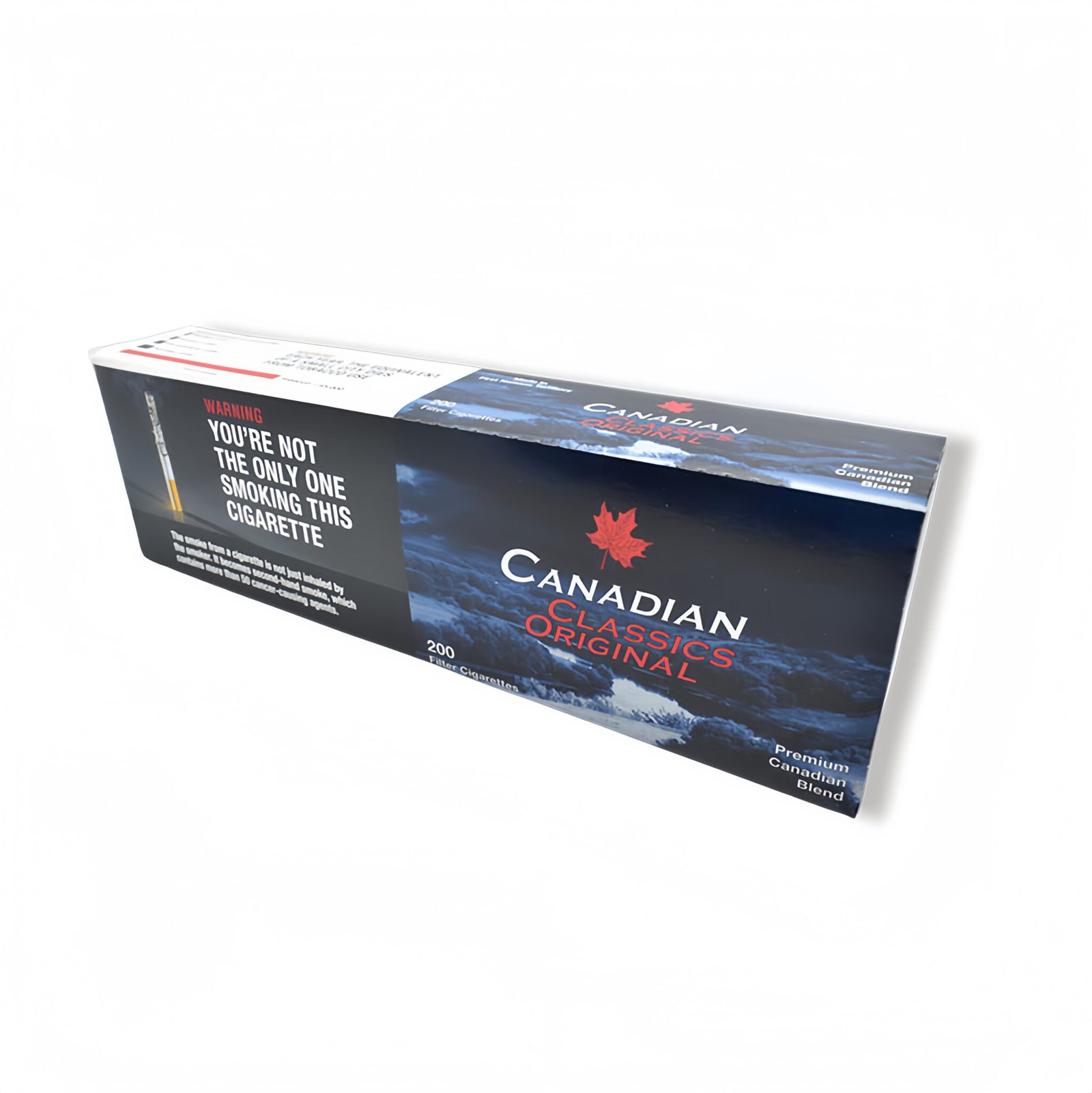
If the border math feels like more trouble than it is worth, shopping domestically is often the simpler route. SmokeKing is a trusted online smoke shop serving customers across Canada with a wide selection of quality cigarette and tobacco products, offering a convenient online shopping experience, competitive pricing, and reliable delivery nationwide. Its catalogue of Canadian cigarettes includes classic originals, lights and ultra lights, and there is a dedicated range of menthol cigarettes for smokers who prefer a cooler draw. Bulk buyers can also browse the full list of all products to stock up well beyond the single carton that customs allows.
| Popular Pick | Pack Size | Price (CAD) |
|---|---|---|
| Canadian Classics Original | 20 / Pack | $24.99 |
| Canadian Menthol King Size | 25 / Pack | $28.99 |
| Mix & Match – Pick Any 50 Cartons | 50 Cartons | $990 |
Frequently Asked Questions
Can visitors to Canada bring the same 200 cigarettes?
Yes. Non-residents entering Canada for a visit may bring 200 cigarettes, 50 cigars, 200 grams of manufactured tobacco and 200 tobacco sticks for personal use, provided they meet the provincial minimum age. The 48-hour rule applies only to returning residents.
Does the limit apply to vapes and nicotine pouches?
Vaping products are not part of the tobacco exemption but fall under the general goods allowance, subject to their own federal excise duty since 2022. Flavoured vape restrictions vary by province, so check local rules before you travel.
Can I bring two cartons if I was away for two weeks?
No. The tobacco allowance does not increase with a longer trip. Whether you are away 2 days or 2 months, the duty-free limit stays at 200 cigarettes per adult.
Are duty-free cigarettes bought in Canada before departure counted?
Yes. Cigarettes purchased at a Canadian duty-free shop on your way out of the country must be declared and counted toward your 200-cigarette exemption when you return.
What if I am travelling with children?
Minors under the provincial legal age have no tobacco exemption, and adults cannot claim an extra allowance on their behalf. Children do keep their own exemption for general goods such as clothing and gifts.
Canada’s border rules on tobacco are straightforward once you know the key numbers: 48 hours away, 200 cigarettes, legal age for your port of entry, and always declare. Follow those four points and your return home will be smooth. For questions about ordering tobacco products within Canada, you can contact SmokeKing directly. This article is for general information only; customs rates and provincial rules change periodically, so always confirm current requirements with the CBSA before you travel.